
Students learn to write by writing. Fulwood Academy made more of that practice possible at scale.
How Fulwood Academy built shorter feedback loops between writing, feedback and the next attempt — making frequent writing practice possible at scale while keeping teacher judgement at the centre.


ABOUT FULWOOD ACADEMY
At Fulwood Academy, literacy is a whole-school priority
At Fulwood Academy, literacy doesn't sit with one subject alone. Reading and writing are developed across the curriculum.

“We want our pupils to have every opportunity to become confident writers. But we also have to look after our teachers. Improving one shouldn't have to come at the expense of the other.”
Mr Andrew Galbraith
Principal, Fulwood Academy
THE CHALLENGE
Students need shorter feedback loops and more practice. The challenge is making them sustainable for teachers.
Getting students to write more only leads to better learning if the rest of the feedback loop can keep up.
Students need feedback while the work is still relevant, time to understand it, and another opportunity to act on it. Every additional cycle creates more work for teachers — more writing to review and more feedback to give, alongside teaching the curriculum.
It's a system problem. The challenge is creating a shorter feedback loop that happens frequently without becoming unsustainable for teachers.
THE APPROACH
Fulwood Academy turned writing into a repeated cycle of practice, feedback and improvement
Fulwood Academy changed the feedback loop by separating what technology could accelerate from what still needed teacher judgement and pupil action.
TILF could read a piece of writing and generate feedback quickly, identifying likely strengths, weaknesses and areas for improvement across far more work than a teacher could process in the same time. But it didn't know where that writing sat within the curriculum, what had happened in previous lessons or what a particular pupil needed most at that moment.
Teachers brought that context. They selected the tasks, reviewed the AI's reading, refined or rejected feedback where necessary and decided what pupils should focus on next. Pupils still had to read, think, act on the feedback and carry something from it into their next piece of writing.
“The AI accelerated part of the process. The educational value emerged from the organisation built around it.”
Lee McLinden
Deputy Headteacher, Fulwood Academy
THE EVIDENCE
What the evidence showed
During the period when Fulwood Academy moved to more frequent writing and timely feedback with TILF, pupils improved, and much of that improvement remained when they sat the externally assessed GCSE.
Those results belong to the whole learning system around the pupil: the practice they put in, the teaching they received, the feedback they acted on, and the decisions teachers made about what to teach, revisit or reinforce next.
In total, Fulwood Academy evaluated 4,537 pieces of pupil work across 161 assessments with TILF during the 2025–26 academic year.
Grade 5+ in English Literature
What the evidence shows is that more frequent writing and timely feedback became practical, improvement was visible during that period, and much of the improvement at grade 5+ remained when pupils sat the externally assessed GCSE.
IN PRACTICE
Making the feedback loop work meant building the right routines around it
Making feedback faster didn't automatically mean pupils would learn more from it. The important work was building routines around what happened next.
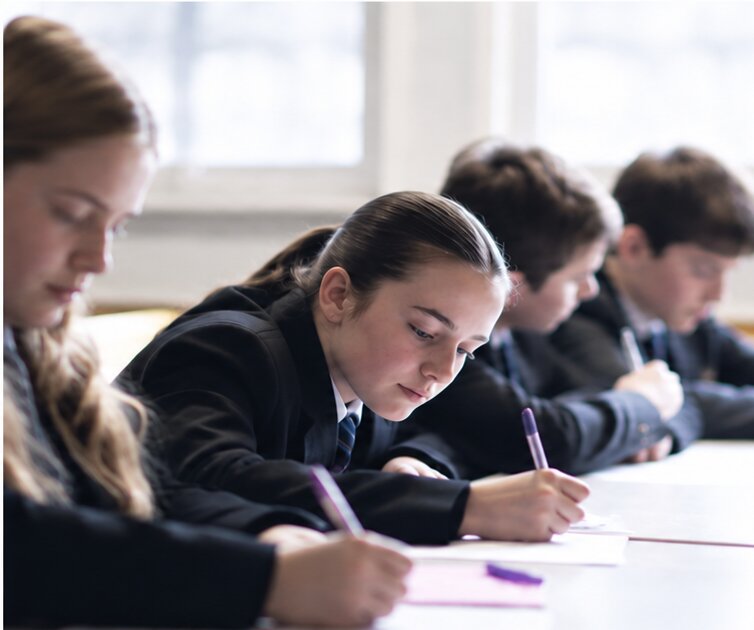
At Fulwood Academy, practice happened by hand, in class and under teacher supervision, giving teachers a clear picture of what pupils could produce themselves. Teachers scanned the work into TILF, reviewed and edited the feedback, then gave it to pupils to act on in the following lesson.
Teachers needed to decide which feedback mattered most, give pupils time to act on it and make the next piece of writing part of the same learning cycle. If feedback didn't reflect what had been taught, missed the context of the task or simply wasn't the right priority for that pupil, teachers changed it.
Updated October 7, 2026